In the modern landscape of data processing and automation, a pipeline orchestrator stands as a pivotal element in streamlining and managing complex workflows. As a supplier of Pipeline solutions, I’ve witnessed firsthand the transformative power of pipeline orchestration and its far – reaching implications across various industries. Pipeline
Defining a Pipeline Orchestrator
At its core, a pipeline orchestrator is software or a platform designed to manage, schedule, and monitor a series of interconnected tasks or processes, often referred to as a pipeline. These pipelines can be incredibly diverse, spanning from data engineering workflows that extract, transform, and load (ETL) data to machine – learning pipelines that train, validate, and deploy models.
Think of a pipeline as an assembly line in a manufacturing plant. Each station on the assembly line has a specific task, and the products move from one station to the next in a particular order. Similarly, in a digital pipeline, data or jobs flow through a sequence of operations. A pipeline orchestrator is like the supervisor on the factory floor. It ensures that each task in the pipeline gets executed at the right time, in the right sequence, and with the appropriate resources.
Key Features of a Pipeline Orchestrator
Task Scheduling
One of the primary functions of a pipeline orchestrator is task scheduling. It can determine when a particular task should start and end. For instance, in a financial data analysis pipeline, a task to collect daily market data might be scheduled to run at the end of the trading day. The orchestrator ensures that this data collection task is initiated promptly and that subsequent tasks, such as data preprocessing and analysis, follow in a timely manner.
Dependency Management
Dependencies are a crucial aspect of any pipeline. A task might rely on the successful completion of another task. A pipeline orchestrator can manage these dependencies effectively. It will not start a task until all its prerequisites are met. For example, in a software development pipeline, unit testing must be completed successfully before integration testing can begin. The orchestrator keeps track of these dependencies and orchestrates the workflow accordingly.
Monitoring and Logging
Monitoring the progress of a pipeline is essential to detect and address issues promptly. A pipeline orchestrator provides real – time visibility into the status of each task in the pipeline. It can show whether a task is running, completed, or has failed. Additionally, it logs detailed information about the execution of each task, including input data, execution time, and any error messages. This logging functionality is invaluable for debugging and auditing purposes.
Resource Allocation
Efficient resource allocation is another key feature. A pipeline orchestrator can allocate the appropriate computing resources, such as CPU, memory, and storage, to each task in the pipeline. This ensures that tasks are executed efficiently without over – or under – utilizing resources. In a large – scale data processing pipeline, for example, tasks that require significant computational power can be allocated more resources, while less demanding tasks can use fewer resources.
Retry and Error Handling
Errors are inevitable in any complex system. A good pipeline orchestrator has built – in retry and error – handling mechanisms. If a task fails, the orchestrator can automatically retry it a certain number of times. It can also be configured to take specific actions when a task fails repeatedly, such as sending an alert to the operations team or skipping certain tasks if the failure is non – critical.
Use Cases of Pipeline Orchestrators
Data Engineering
In data engineering, pipeline orchestrators are used to automate the ETL process. Data is extracted from various sources, such as databases, APIs, or files, transformed to fit the desired format, and loaded into a target system. For example, a large e – commerce company might use a pipeline orchestrator to extract customer transaction data from multiple stores, transform it to a unified format, and load it into a data warehouse for analytics.
Machine Learning
Machine learning pipelines involve multiple steps, including data collection, preprocessing, model training, validation, and deployment. A pipeline orchestrator can manage these steps efficiently. For instance, in a healthcare – related machine – learning project, the orchestrator can schedule the collection of patient data, ensure that the data is preprocessed correctly, and then train and deploy a predictive model for disease diagnosis.
DevOps
In DevOps, pipeline orchestrators are used to automate the software development lifecycle. They can manage tasks such as code compilation, testing, integration, and deployment. For example, a cloud – based software company might use a pipeline orchestrator to automatically build and test new code changes, and then deploy the updated version of the software to production environments.
Advantages of Using a Pipeline Orchestrator
Increased Efficiency
By automating the execution of tasks in a pipeline, a pipeline orchestrator significantly reduces the time and effort required to manage complex workflows. It eliminates the need for manual intervention at each step, allowing teams to focus on more strategic tasks.
Improved Reliability
The dependency management, retry, and error – handling features of a pipeline orchestrator improve the reliability of the pipeline. It ensures that tasks are executed correctly and that any issues are detected and resolved quickly.
Scalability
As the volume of data or the complexity of workflows increases, a pipeline orchestrator can scale to handle the additional load. It can allocate resources dynamically to accommodate growing demands.
Audibility and Compliance
The detailed logging and monitoring capabilities of a pipeline orchestrator provide an audit trail of all actions taken in the pipeline. This is crucial for compliance with regulations and internal policies.
Why Choose Our Pipeline Orchestration Solutions
As a Pipeline supplier, we understand the unique challenges faced by different industries when it comes to pipeline orchestration. Our solutions are tailored to meet the specific needs of our customers.
Flexibility
Our pipeline orchestration platform is highly flexible. It can be easily integrated with existing systems and tools, whether it’s a data warehouse, a machine – learning framework, or a DevOps toolchain. This allows our customers to leverage their existing investments while enhancing their pipeline management capabilities.
Ease of Use
We have designed our platform with user – friendliness in mind. Even non – technical users can easily configure and manage pipelines using our intuitive graphical interface. This reduces the learning curve and enables teams to quickly adopt and start using our solutions.
High Performance
Our pipeline orchestrator is built to deliver high – performance results. It can handle large – scale data processing and complex workflows with ease. We use advanced algorithms and optimization techniques to ensure that tasks are executed as efficiently as possible.
Excellent Support
We provide comprehensive support to our customers. Our team of experts is available to assist with installation, configuration, and troubleshooting. We also offer regular updates to ensure that our solutions are up – to – date with the latest technologies and best practices.
Contact Us for Procurement and洽谈
If you are looking for a reliable and efficient pipeline orchestration solution, we are here to help. Our team of experienced professionals can work with you to understand your specific requirements and provide a customized solution that meets your needs. Whether you are a small startup or a large enterprise, our pipeline orchestration solutions can help you streamline your workflows, improve efficiency, and achieve your business goals.
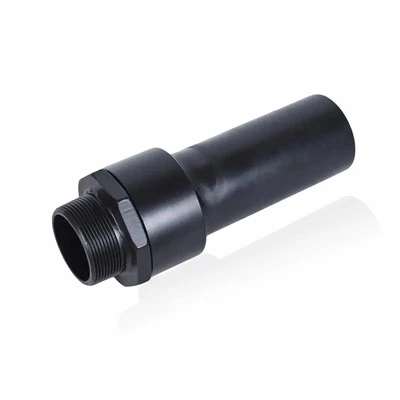
Steel-plastic Joint Don’t hesitate to reach out to us to start a conversation about how our pipeline orchestration solutions can benefit your organization. We look forward to discussing your procurement needs and how we can partner with you to drive success.
References
- Kimball, Ralph, and Margy Ross. "The Data Warehouse Toolkit: The Definitive Guide to Dimensional Modeling." Wiley, 2013.
- Chollet, Francois. "Deep Learning with Python." Manning Publications, 2017.
- Humble, Jez, and David Farley. "Continuous Delivery: Reliable Software Releases through Build, Test, and Deployment Automation." Addison – Wesley Professional, 2010.
Yuyao Aoshi Hydraulic Components Manufacturing Co., Ltd.
As one of the most professional pipeline manufacturers and suppliers in China, we’re featured by quality products and good service. Please rest assured to wholesale pipeline in stock here and get quotation from our factory. Customized orders are welcome.
Address: Huilong village, Zhangting town, Yuyao city, Zhejiang province, China.
E-mail: renxuwei@vip.163.com
WebSite: https://www.jintongtrading.com/
