Hey everyone, thanks for tuning in to this week’s post—today we’re diving into a question I get literally every single week at our shop: Can FR4 PCB be used in medical devices? FR4 PCB
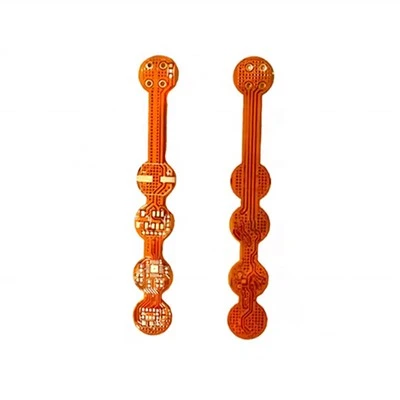
First off, let’s cut through the jargon for a sec, because I know a lot of people hear “FR4 PCB” and their eyes glaze over, especially if you’re deep in medical device manufacturing. FR4, for the uninitiated, is the go-to fiberglass-reinforced epoxy laminate that 90% of PCBs out there are made from. It’s cheap, super reliable, easy to source, and we crank out hundreds of thousands of FR4 boards a month for all sorts of industries. But medical devices? That’s a whole different ballgame, right? Like, we’re talking about tools that touch patients, run in hospitals, and have to be 100% safe—no cutting corners.
Let’s start with the basics of why people even ask this. I’ve had med device engineers come in here panicking a couple years back, saying “We were told FR4 is too flammable or not biocompatible enough for our insulin pump.” Turned out they were mixing up old stock specs with modern FR4 materials, and that’s a super common mistake. Back in the day, some cheaper, uncertified FR4 variants were only rated for industrial use, not medical, but today’s FR4 has come so far it’s actually a top pick for a lot of FDA-cleared and CE-marked gear.
First, let’s tackle the big ones: flammability and safety. FR4 stands for “Flame Retardant 4,” right? The “4” refers to the UL 94 V-0 rating— that’s the gold standard for materials that need to self-extinguish within 10 seconds after a flame is removed, no dripping burning bits. Medical devices can’t have a PCB that catches fire mid-use, that’s a literal life hazard. And every FR4 board we supply is UL 94 V-0 rated, full stop. We don’t even stock anything lower, because if we mess up on specs, that’s on us. We had a client last year making portable ECG monitors, they needed boards that could survive being dropped, sit in a cold warehouse for weeks, and not burn up if there was a power surge. FR4 was perfect for that—rigid enough to take a drop, the epoxy doesn’t crack easily, and the flame retardant formula is specifically designed to meet medical electrical equipment standards (like IEC 60601, for anyone who knows that code).
Next up: biocompatibility. This is the make-or-break point for any device that touches a patient—wearable sensors, implantable pumps, even diagnostic tools that get near mucous membranes. A lot of engineers assume FR4 has toxic epoxy resins that leach chemicals, but that’s not true for medical-grade FR4. Regular FR4 might have trace amounts of certain curing agents, but we carry a line of biocompatible FR4 that passes ISO 10993 tests—you know, the international standard for evaluating medical device biocompatibility. That’s non-negotiable for us. Last quarter we shipped 50,000 of these boards to a company making continuous glucose monitors (CGMs) that stick to patients’ arms, and they told us the biocompatibility testing went without a hitch. No weird leachables, no skin irritation, exactly what they needed. Implantable devices? We’ll be real—for deep implants like pacemakers, sometimes people use more expensive substrates like polyimide, but for superficial implants, wearable monitors, or even the circuit boards inside a MRI machine’s patient monitoring unit, medical-grade FR4 works totally fine. It’s all about matching the FR4 variant to the device’s use case, not writing off FR4 entirely.
Then there’s durability and performance. Medical devices are often used in messy, high-stress environments—think a surgical tool that gets sterilized with ethylene oxide (EtO) or autoclaved, or a portable ultrasound that gets bumped around in an ambulance. FR4 is rigid, has great dimensional stability, so it doesn’t warp or shift even when it’s exposed to temperature changes or cleaning chemicals. We actually test every batch of our medical FR4 boards to make sure they withstand autoclaving (high heat, steam pressure) for up to 20 cycles— that’s the standard for reusable surgical tools. And EtO sterilization? FR4 holds up way better than a lot of other substrates, no degradation of the laminate or the copper traces. We had a client making handheld surgical drill controllers, they were using a polyimide board before, but it kept cracking after a few autoclave cycles. Switched to our medical FR4, and they haven’t had a failure in 8 months. That’s a win.
Wait, but let’s not sugarcoat the limits, because honesty is what keeps clients coming back. FR4 isn’t for every medical device. For example, if you’re making a fully implantable defibrillator that’s inside the body for 10+ years, and it’s going through soft tissue, some engineers prefer the flexibility of polyimide, because FR4 is rigid and can cause more friction or irritation. Also, if you need a PCB that’s super thin, bendable, or has very high-frequency signals (like in next-gen wearable EEGs that track brain waves), specialized FR4 variants like high-frequency FR-408 or Rogers materials are better than standard stuff. But for the vast majority of medical devices on the market today—portable monitors, insulin pumps, diagnostic test strips, surgical tools, even lab equipment that runs blood samples—standard medical-grade FR4 is not only suitable, it’s the most cost-effective option out there.
A lot of people ask us why FR4 is still so popular in med devices. Let’s do the math: polyimide PCBs cost 2-3x more than equivalent FR4 boards. For a company making a low-cost CGM that needs to sell millions of units, that’s a huge difference in production costs without sacrificing safety or performance. And with today’s FR4 being certified to all the major medical standards, there’s really no reason to pay extra for a different substrate unless you have a specific use case that requires flexibility or high frequency. We actually worked with a startup a few years back that was making a home-use blood glucose monitor—they were initially going for polyimide because they thought FR4 wasn’t “medical enough.” But after we walked them through the UL and ISO testing, and showed them case studies of other successful devices using our medical FR4, they switched, and that’s one of our best clients now. They saved almost $200k on their first production run, which let them bring the monitor to market 6 months faster.
Now, let’s talk about what we do differently as an FR4 PCB supplier for medical clients, because that’s where the rubber meets the road. Regular industrial FR4 suppliers will just sell you a board that meets UL specs. We go above and beyond. First, every medical FR4 board we ship has a full traceability log—lot numbers, material certifications, test results, all the paperwork med device engineers need for FDA submissions or CE marking. No more digging through files to find a UL certificate that’s expired or not matched to your specific board. Second, we offer custom modifications that are critical for medical gear: things like solder mask that’s biocompatible (not just standard green or blue), edge plating that prevents sharp corners that could irritate patients or staff, and conformal coating that’s moisture-resistant for devices that get sweaty or spilled on. Third, we’re here to help with testing. If you’re a small company that doesn’t have a big R&D team, we can point you to third-party labs that do ISO 10993 testing for our materials, or work with your engineering team to adjust the board design to meet your exact needs without overcomplicating things.
I’ve had some of our longest-term clients call us their “med device go-to” because we get that their products aren’t just electronics—they’re tools that help people stay healthy, or even save lives. That means we don’t cut corners on material specs, we don’t rush orders when a hospital needs a batch of portable ECG monitors stat, and we always tell it like it is. If FR4 isn’t the right fit for your device? We’ll be the first to tell you that, and point you to the material that is. No pushing a product that doesn’t make sense, just honest advice.
Let’s wrap this up with a quick recap, because I know this is a lot of info for anyone not in the PCB or med device space. So: Can FR4 PCB be used in medical devices? Absolutely—if it’s medical-grade, UL 94 V-0 rated, ISO 10993 certified, and matched to your device’s specific use case. It’s not only suitable for most common medical products, it’s often the most reliable, cost-effective option on the market. The old myth that FR4 is only for industrial gear is long gone, and modern variants meet every major safety and regulatory standard required for medical devices.

If you’re an engineer, product manager, or startup founder working on a medical device and wondering if FR4 is right for your project, or if you need a supplier that actually understands the unique requirements of med device PCBs, hit us up to connect for a procurement conversation. No sales pitch, no hidden fees, just straight talk about what materials will work best for your device, and how we can deliver high-quality FR4 PCBs that meet all your regulatory needs.
Multilayer FR4 PCB Board Now, references:
- UL 94 Standard for Safety of Flammability of Plastic Materials for Parts in Devices and Appliances
- ISO 10993 Biological Evaluation of Medical Devices
- IEC 60601 Medical Electrical Equipment – Part 1: General Requirements for Basic Safety and Essential Performance
- NEMA LI 1-2018 Standard for Fiberglass-Reinforced Epoxy Laminate Sheets, Prepregs, and Core Materials for Printed Circuit Boards
- FDA Design Control Guidance for Medical Device Manufacturers
Fastline Circuits Co., Limited
Fastline Circuits Co., Limited is one of the most professional FR4 PCB manufacturers and suppliers in China. With abundant experience, we warmly welcome you to wholesale durable FR4 PCB made in China here and get quotation from our factory. All customized products are with high quality and competitive price.
Address: Room 301, Building B3, Fuqiao 4th District, Qiaotou Community, Fuhai Subdistrict, Bao’an District, Shenzhen, Guangdong Province, China
E-mail: sales@fastlinepcb.com
WebSite: https://www.fastlinepcb.net/
