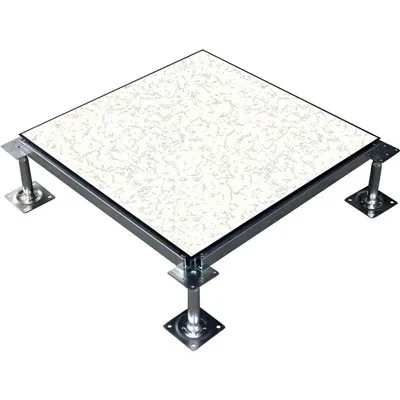
Access floor panels are a crucial component in various commercial and industrial settings, providing a raised platform for efficient cable management, ventilation, and access to underfloor utilities. One of the key challenges that access floor panels face is handling temperature changes. In this blog, as a supplier of access floor panels, I’ll delve into how our products are designed and engineered to effectively manage these temperature variations. Access Floor Panel
Understanding the Impact of Temperature Changes
Temperature changes can have a significant impact on access floor panels. When the temperature rises, materials expand, and when it drops, they contract. This expansion and contraction, known as thermal expansion and contraction, can lead to several issues if not properly managed.
For instance, in a data center where access floor panels are commonly used, the equipment generates a substantial amount of heat. The temperature within the data center can fluctuate widely depending on the workload and the efficiency of the cooling systems. If the access floor panels are not able to handle these temperature changes, they may warp, buckle, or develop gaps between the panels. This not only affects the aesthetic appearance of the floor but also compromises its structural integrity and functionality.
In a cold storage facility, on the other hand, the low temperatures can cause the panels to become brittle and more prone to cracking. The constant cycling between cold and warm temperatures can also accelerate the wear and tear of the panels over time.
Design and Material Selection
To address the challenges posed by temperature changes, we pay meticulous attention to the design and material selection of our access floor panels.
Material Properties
We use high – quality materials that have low coefficients of thermal expansion. For example, many of our panels are made from steel or aluminum. Steel is known for its strength and durability, and it has a relatively low coefficient of thermal expansion. Aluminum, on the other hand, is lightweight and also has good thermal properties. It can conduct heat evenly, which helps to reduce the temperature gradients across the panel and minimize the risk of thermal stress.
In addition to metals, we also offer panels made from composite materials. These composites are engineered to have specific thermal properties, allowing them to resist the effects of temperature changes better than traditional materials. For example, some of our composite panels are reinforced with fibers that help to stabilize the material and reduce its expansion and contraction.
Panel Design
Our panel designs are also optimized to accommodate thermal expansion and contraction. We use a modular design approach, where the panels are installed in a grid pattern with expansion joints. These expansion joints provide a space for the panels to expand and contract without causing damage to the overall floor structure.
The edges of the panels are also designed to interlock in a way that allows for some movement. This helps to prevent the panels from shifting or separating when they expand or contract due to temperature changes. Additionally, we use a floating floor installation method, which means that the panels are not directly attached to the subfloor. This allows the panels to move freely in response to temperature variations, reducing the stress on the panels and the subfloor.
Testing and Quality Assurance
To ensure that our access floor panels can handle temperature changes effectively, we conduct rigorous testing.
Thermal Cycling Tests
We subject our panels to thermal cycling tests in a controlled environment. These tests simulate the temperature variations that the panels may experience in real – world applications. The panels are exposed to a range of temperatures, from very cold to very hot, and the cycle is repeated multiple times.
During the thermal cycling tests, we monitor the panels for any signs of damage, such as warping, cracking, or changes in dimensions. We also measure the panel’s performance in terms of its load – bearing capacity and its ability to maintain a flat surface. If any issues are detected, we make adjustments to the design or the materials to improve the panel’s performance.
Field Testing
In addition to laboratory testing, we also conduct field testing in actual installations. We work with our customers to monitor the performance of our access floor panels in different environments, such as data centers, office buildings, and industrial facilities. This real – world feedback allows us to further refine our products and ensure that they meet the highest standards of quality and performance.
Applications and Benefits
Our access floor panels’ ability to handle temperature changes makes them suitable for a wide range of applications.
Data Centers
In data centers, where temperature control is critical for the proper functioning of the equipment, our access floor panels play a vital role. The panels’ ability to resist thermal expansion and contraction helps to maintain a stable floor surface, which is essential for the safe and efficient operation of the servers and other equipment. The modular design and expansion joints also allow for easy access to the underfloor cables and cooling systems, which can be adjusted as needed to optimize the temperature within the data center.
Industrial Facilities
In industrial facilities, where temperature variations can be extreme, our access floor panels provide a durable and reliable solution. The panels can withstand the harsh conditions, including high temperatures, heavy loads, and chemical exposure. The low coefficient of thermal expansion ensures that the panels will not warp or buckle, even in the face of significant temperature changes.
Office Buildings
In office buildings, our access floor panels offer a comfortable and functional flooring solution. The ability to handle temperature changes helps to maintain a consistent floor surface, which is important for the safety and comfort of the occupants. The panels also provide a convenient way to manage the electrical and communication cables, which can be easily accessed and reconfigured as needed.
Contact Us for Your Access Floor Panel Needs
If you are in the market for high – quality access floor panels that can handle temperature changes effectively, we invite you to contact us. Our team of experts is ready to assist you in selecting the right panels for your specific application. We can provide you with detailed information about our products, including their features, specifications, and performance.

We understand that every project is unique, and we are committed to providing customized solutions that meet your exact requirements. Whether you are building a new data center, renovating an office building, or upgrading an industrial facility, we have the expertise and the products to help you achieve your goals.
Anti Static Technical Floor Don’t let temperature changes compromise the performance of your access floor. Contact us today to start a conversation about your access floor panel needs. We look forward to working with you.
References
- "Thermal Expansion in Building Materials" – Building Science Press
- "Design and Testing of Access Floor Systems" – Journal of Construction Engineering and Management
- "Materials for High – Performance Flooring" – American Society of Civil Engineers
Fineco Tech Co., Ltd.
As one of the most professional access floor panel manufacturers and suppliers in China, we’re featured by quality products and good service. Welcome to wholesale customized access floor panel made in China here from our factory. If you have any enquiry about cooperation, please feel free to email us.
Address: Wuyue Square, Wujin District, Changzhou, Jiangsu, China
E-mail: info@finecotech.com
WebSite: https://www.finecoglobal.com/
