Hey there! I’m part of a Metal 3D Printing supplier, and today I wanna chat about a hot topic: Can metal 3D printing replace traditional manufacturing methods? It’s a question that’s been buzzing around in the manufacturing world for a while, and there are some really interesting points to consider. Metal 3D Printing
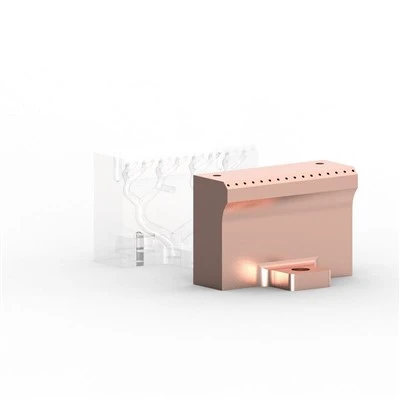
First off, let’s talk about what metal 3D printing is all about. In simple terms, it’s a process where you can create metal parts layer by layer using a digital model. Instead of cutting away material like in traditional methods such as machining or forging, you’re building it up. This gives you a lot of flexibility in terms of design. You can make parts with complex geometries that would be super difficult or even impossible to achieve with traditional manufacturing.
Take, for example, aerospace components. The aviation industry is always looking for ways to make parts lighter and more efficient. Metal 3D printing allows them to do just that. They can design parts with internal lattice structures that reduce weight without sacrificing strength. These structures would be extremely hard to manufacture using traditional methods. And in a field where every bit of weight reduction can lead to cost savings in fuel, that’s a huge advantage.
Another area where metal 3D printing shines is in rapid prototyping. If you’re a product designer or an engineer, being able to quickly turn your ideas into physical parts is crucial. With traditional manufacturing, it can take weeks or even months to get a prototype made. But with metal 3D printing, you can have a prototype in your hands in just a few days. This can speed up the product development cycle significantly and allow for more iterations of a design.
But traditional manufacturing methods aren’t going down without a fight. They’ve been around for a long time, and they’ve got some serious advantages too. One of the biggest is cost – per – part for large production runs. If you need to make thousands of the same part, traditional manufacturing methods are usually much more cost – effective. For instance, injection molding is a well – established method for making plastic parts in large quantities. Once the mold is made, the cost of producing each individual part is relatively low. The same goes for metal forging and casting for high – volume production.
Quality control is another aspect where traditional methods have an edge, at least for now. Traditional manufacturing processes are well – understood, and there are well – established quality control measures in place. For example, in machining, you can use precision tools and gauges to ensure that each part meets the exact specifications. In metal 3D printing, the quality can vary depending on factors like the printer settings, the quality of the metal powder, and the post – processing steps. Although the technology is improving, there’s still some work to be done to make it as reliable as traditional methods in terms of consistent quality.
Let’s also talk about the production speed. Traditional manufacturing can be much faster for large – scale production. For example, a stamping press can produce dozens or even hundreds of parts in a minute. Metal 3D printing is a relatively slow process because it builds the part layer by layer. Each layer has to be properly fused, and this takes time. So if you have a tight production deadline and need a large number of parts quickly, traditional manufacturing might be the better option.
However, there are ways in which metal 3D printing can work in tandem with traditional manufacturing. You can use metal 3D printing to make complex molds or tooling that can then be used in traditional manufacturing processes. This can enhance the capabilities of traditional methods and allow for more innovation. For example, using 3D – printed metal inserts in an injection mold can improve heat transfer and reduce cycle times.
The material options are also something to consider. Traditional manufacturing has a wide range of materials available, and they’ve been using these materials for a long time, so they know how to work with them effectively. Metal 3D printing is constantly expanding its material options, but there are still limitations. Some exotic metals or alloys that are commonly used in traditional manufacturing might not be readily available for 3D printing yet.
In terms of environmental impact, metal 3D printing has some advantages. Since it’s an additive manufacturing process, it produces less waste compared to subtractive methods like machining. You’re only using the amount of metal that’s needed to build the part, rather than cutting away a large portion of the raw material. However, the production of metal powders used in 3D printing can have its own environmental footprint, so it’s not a completely zero – waste solution.
So, can metal 3D printing replace traditional manufacturing methods? The short answer is probably not in the near future. Traditional methods are deeply ingrained in the manufacturing industry, and they’re great for high – volume, standard – part production. But metal 3D printing is definitely a game – changer for certain applications. It’s opening up new possibilities for design, innovation, and rapid prototyping.
In my opinion, we’re going to see a future where metal 3D printing and traditional manufacturing methods coexist. They’ll complement each other, each used for what they’re best at. For small – batch, custom – designed parts with complex geometries, metal 3D printing will likely be the go – to option. For large – scale production of standard parts, traditional manufacturing will still rule the roost.
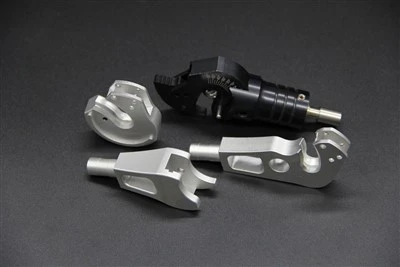
If you’re in the market for metal parts and you’re not sure which method is right for you, we’re here to help. We’ve got a team of experts who can discuss your project requirements, show you the capabilities of metal 3D printing, and give you an honest assessment of whether it’s the best fit for your needs. Whether you’re interested in rapid prototyping, producing small – batch parts, or looking for innovative design solutions, we can provide the support you need. So, don’t hesitate to reach out and start a conversation with us about your metal part needs.
5-Axis CNC Machining References:
- "Additive Manufacturing Technologies: 3D Printing, Rapid Prototyping, and Direct Digital Manufacturing" by Ian Gibson, David W. Rosen, and Brent Stucker.
- Industry reports on metal manufacturing and 3D printing trends from leading market research firms.
Shenzhen Multi-Wins Precision Technology Co., Ltd.
As one of the most professional metal 3d printing manufacturers and suppliers in China, we have world-leading production equipment and strong manufacturing capabilities. Please feel free to buy customized metal 3d printing made in China here from our factory. Also, quotation is available.
Address: 1 Phase, Yi’an City Central Garden, Longfei Avenue, Longgang District, Shenzhen, GD, China. 518100
E-mail: info@multi-wins.com
WebSite: https://www.multi-wins.com/
