Can a Tapping Machine be Used for Fine – Pitch Threads?
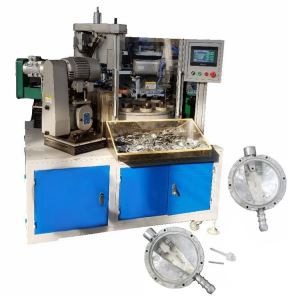
As a supplier of tapping machines, I often encounter inquiries from customers about the suitability of our machines for different types of threading tasks, especially when it comes to fine – pitch threads. Fine – pitch threads have unique characteristics, and understanding whether a tapping machine can handle them is crucial for our customers’ manufacturing needs. Tapping Machine
Understanding Fine – Pitch Threads
Fine – pitch threads are defined by their relatively small pitch compared to coarse – pitch threads. The pitch is the distance between adjacent thread crests. Fine – pitch threads are commonly used in applications where precise adjustment, high clamping force with less axial movement, or resistance to vibration loosening is required. For example, in the aerospace industry, fine – pitch threads are used in critical components such as engine parts and avionics systems. In the electronics industry, they are found in delicate connectors and small – sized mechanical assemblies.
These threads typically have a smaller lead angle, which affects the cutting process. The smaller pitch also means that the number of threads per unit length is higher, leading to a greater number of cutting edges engaged during the tapping process. Additionally, fine – pitch threads are more sensitive to errors in thread profile and pitch accuracy, making it essential to have a high – precision tapping process.
Capabilities of Tapping Machines for Fine – Pitch Threads
Mechanical Tapping Machines
Traditional mechanical tapping machines have been used for decades in manufacturing. They operate based on a set of gears and a spindle mechanism. These machines can generally be used for fine – pitch threads, but they have limitations.
The speed control in mechanical tapping machines is relatively fixed, which can pose a problem when tapping fine – pitch threads. Fine – pitch threads require a slower and more controlled cutting speed to prevent thread damage. If the speed is too high, the cutting edges may generate excessive heat, leading to tool wear and poor thread quality. Moreover, the mechanical linkages in these machines can introduce a certain amount of backlash, which can affect the pitch accuracy of fine – pitch threads.
CNC Tapping Machines
CNC (Computer Numerical Control) tapping machines offer a more advanced solution for tapping fine – pitch threads. These machines are controlled by a computer program, which allows for precise control of the tapping process.
One of the key advantages of CNC tapping machines is their ability to adjust the cutting speed and feed rate accurately. For fine – pitch threads, the operator can set the optimal speed and feed parameters to ensure a smooth cutting process. The computer control also eliminates the problem of backlash, as the movements are precisely calculated and executed.
CNC tapping machines can also perform multiple passes if necessary. This is especially useful for fine – pitch threads in hard materials. By making multiple passes, the cutting forces are distributed more evenly, reducing the risk of tool breakage and improving the thread quality.
Servo – Driven Tapping Machines
Servo – driven tapping machines are a type of advanced tapping equipment. They use servo motors to control the spindle and feed motion.
These machines offer excellent dynamic performance, allowing for quick starts and stops. This is beneficial when tapping fine – pitch threads, as it enables precise control of the cutting process. The servo motors can also provide high torque at low speeds, which is essential for cutting fine – pitch threads in tough materials. Additionally, servo – driven tapping machines can be easily integrated with other manufacturing systems, such as robotic arms, for automated production lines.
Factors Affecting the Use of Tapping Machines for Fine – Pitch Threads
Tool Selection
The choice of tapping tool is crucial when working with fine – pitch threads. High – speed steel (HSS) taps are commonly used for general tapping applications, but for fine – pitch threads, carbide taps may be a better option. Carbide taps are harder and more wear – resistant, which can ensure a longer tool life and better thread quality, especially when tapping in hard materials.
The geometry of the tap also matters. A tap with a proper helix angle can help in chip evacuation, which is essential for fine – pitch threads. If the chips are not evacuated properly, they can cause thread damage and tool breakage.
Material Properties
The material being tapped has a significant impact on the tapping process for fine – pitch threads. Soft materials like aluminum can be tapped relatively easily, but they may require special care to prevent chip buildup. Hard materials such as stainless steel or titanium pose more challenges, as they require higher cutting forces and slower cutting speeds.
Work – hardening materials can also be problematic. For example, some stainless steel alloys tend to work – harden during the tapping process, which can quickly dull the cutting edges of the tap and affect the thread quality. In such cases, proper lubrication and coolant are essential to reduce the cutting temperature and prevent work – hardening.
Machine Rigidity
The rigidity of the tapping machine is another important factor. A rigid machine can withstand the cutting forces without excessive vibration, which is crucial for maintaining the pitch accuracy of fine – pitch threads. A machine with poor rigidity may produce inconsistent thread profiles and reduced thread quality. Manufacturers typically design their tapping machines with a focus on rigidity, using heavy – duty frames and high – quality components.
Ensuring Quality When Tapping Fine – Pitch Threads
Quality Control Measures
To ensure the quality of fine – pitch threads, various quality control measures should be implemented. This includes inspecting the tap before use to check for any damage or wear. During the tapping process, periodic checks can be made using thread gauges to verify the pitch and thread profile.
Non – destructive testing methods, such as ultrasonic testing, can also be used to detect any internal defects in the threads. Additionally, statistical process control (SPC) techniques can be applied to monitor the tapping process and identify any trends or variations that may affect the thread quality.
Operator Training
Operator training is essential for successful tapping of fine – pitch threads. Operators should be familiar with the specific requirements of fine – pitch threading, including tool selection, machine settings, and quality control procedures. They should also be trained to recognize the signs of potential problems, such as excessive tool wear or chip buildup, and take appropriate actions.
In Conclusion
In conclusion, a tapping machine can be used for fine – pitch threads, but the choice of machine type, along with proper tool selection, consideration of material properties, and implementation of quality control measures, is crucial. CNC tapping machines and servo – driven tapping machines offer significant advantages in terms of precision and control, making them well – suited for fine – pitch threading applications.

As a supplier of tapping machines, we are committed to providing our customers with the best solutions for their threading needs. Whether you are working on high – precision aerospace components or delicate electronic products, our range of tapping machines can be tailored to meet your requirements for fine – pitch threading.
Vibrating Sorters If you are interested in learning more about our tapping machines or have specific requirements for fine – pitch threads, we invite you to contact us for a detailed discussion. Our team of experts is ready to assist you in selecting the most suitable machine and providing technical support for your manufacturing processes.
References
- ASME B1.1 – 2019, Unified Inch Screw Threads (UN and UNR Thread Forms).
- ISO 68 – 1:2016, ISO general purpose screw threads — Basic profile — Part 1: Metric screw threads.
- Boothroyd, G., Dewhurst, P., & Knight, W. (2011). Product Design for Manufacture and Assembly. CRC Press.
Ruian Hensen Automatic Machinery Co., Ltd.
Ruian Hensen Automatic Machinery Co., Ltd. is well-known as one of the leading tapping machine manufacturers and suppliers in China, featured by quality products and good price. Please feel free to buy customized tapping machine made in China here from our factory. Contact us for quotation.
Address: No.199, 3rd Kaifa road, Dongshan industrial area, Ruian, Zhejiang China
E-mail: ymy3562@vip.163.com
WebSite: https://www.hensen-machine.com/
