If you’re reading this, chances are you’re either a fleet manager, a gas station operator, or someone who’s spent late nights troubleshooting why a CNG daughter station went dark during a storm—and lost thousands in unfulfilled contracts, or worse, faced fines for delaying commercial vehicle fueling. As a supplier who’s worked with 70+ CNG daughter stations across the Midwest and Southeast U.S. over the last 12 years, I get that when a client asks, “How much does a backup power system for our daughter station cost?” they’re not asking for a generic number. They’re asking for something that fits their specific site, their downtime risk, and their budget—without overspending on features they’ll never use. Let’s break this down like I’d break it down for my team when we’re prepping a quote, no jargon, no empty promises. CNG Daughter Station
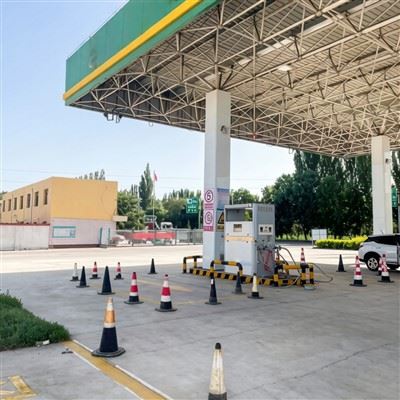
First, let’s ground this in what a CNG daughter station actually is, because a lot of people mix it up with primary CNG stations. A daughter station takes high-pressure CNG delivered via tube trailers (usually 30,000-40,000 psi) and dispenses it to light- and medium-duty vehicles—think delivery vans, school buses, and local cargo trucks—at pressures between 3,000 and 3,600 psi. The critical piece here is that the site relies on three main pieces of powered equipment to run 24/7: the tube trailer compressor that compresses the incoming CNG (wait, no—actually, some stations use a booster compressor, but either way, it needs electricity), the pressure control system that regulates output to avoid damage, and the point-of-sale and vehicle ID systems for fleets. If any of those go dark, you can’t fuel anyone. A bad thunderstorm took out a small station in Dayton, Ohio, back in 2019 for 11 hours; their client— a local delivery company that runs 200 CNG vans—lost $12,000 in missed deliveries that day. That’s when I started pushing every client to stop seeing backup power as a “nice to have” and start seeing it as a line item that prevents emergency costs far higher than the system itself.
Now, let’s talk about the variables that make the price jump around, because there’s no one-size-fits-all number. The biggest factor here is load size—how much power does your daughter station actually need? Most small, under-5-dispenser stations (the ones that serve local fleets of 50-100 vehicles) only need between 10 kW and 25 kW of backup power. Mid-sized stations (6-12 dispensers, serving 100-300 vehicles) usually need 30 kW to 75 kW. Large, multi-dispenser stations near interstates, that serve 300+ vehicles 16 hours a day, might need 100 kW to 150 kW. That load number is non-negotiable, because undersized generators will die mid-outage, and oversized generators will cost you tens of thousands in upfront fees you don’t need.
Next, the type of backup power system you choose is the next big price driver. We mostly work with three types for CNG daughter stations, and I can tell you straight up which works best for which site:
-
Diesel Generators: This is the workhorse for most small to mid-sized stations. For a 15 kW diesel generator (perfect for 2-5 dispenser stations), the upfront cost is between $9,500 and $15,000. For a 50 kW unit (good for 6-10 dispensers), that jumps to $25,000 to $35,000. But wait—don’t forget the fuel. You need a bulk diesel tank (1,000 gallons minimum for 24 hours of runtime) which adds another $3,000 to $6,000, plus installation of the tank, fuel lines, and automatic transfer switch (the thing that kicks the generator on when power goes out) which runs $2,000 to $4,000. Total for a 15 kW diesel setup is usually $15,000 to $25,000; a 50 kW setup is $30,000 to $45,000. The downside here is maintenance: diesel filters, oil changes, and fuel testing every 6 months, plus you have to make sure your tank is topped off year-round. We once had a client in Alabama skip fuel testing and end up with bad diesel that ruined their generator during an ice storm in 2021—cost them $8,000 in repairs plus 14 hours of downtime.
-
Natural Gas (NG) Generators: If your daughter station is near a natural gas line, this is a game-changer for reliability. No more worrying about running out of fuel or old diesel. A 15 kW NG generator is $12,000 to $18,000 upfront, with the transfer switch adding $1,500 to $3,000 (most NG generators integrate seamlessly with the existing site gas line, so no separate bulk fuel tank needed). For a 50 kW NG unit, that’s $28,000 to $40,000. The biggest plus here is fuel security—natural gas is piped in, so as long as the line doesn’t break, you have fuel. Maintenance is also lower; most owners only need a filter change once a year, not twice. We’ve seen clients with NG generators go 5+ years without a major issue, compared to diesel generators that need work every 2-3 years. The only catch? If your site is more than 100 feet from a main natural gas line, you’ll need to run a lateral line, which adds $5,000 to $10,000, so that’s a variable to factor in.
-
Battery Energy Storage Systems (BESS): This is the newer, quieter option, great for urban sites where noise or emissions matter. A 10 kW BESS (for small stations) is $8,000 to $12,000, and a 50 kW BESS is $35,000 to $50,000. Wait, that’s more upfront than a diesel generator? Let’s be real: BESS is best for short outages. Most small BESS units only provide 2-4 hours of backup power, which is enough for a quick storm, but not for multi-day outages. If your area gets frequent, prolonged outages (like parts of West Virginia or Kentucky, where storms can knock power out for 72+ hours), you’ll need to pair a BESS with a small generator, pushing total cost up to $40,000 to $60,000 for a mid-sized station. The upside here is zero emissions, almost no maintenance, and quiet operation—perfect if your daughter station is near a residential area. We recently installed a BESS at a station in Columbus, Ohio, that’s right next to a neighborhood; the local council loved that it didn’t have the loud diesel generator noise, so we got a repeat order for their second station.
Now, there are extra costs that most clients forget about, and these can add 10-20% to your total quote, so I always make sure to spell them out upfront. First, site preparation: if your station’s concrete pad isn’t rated for heavy equipment (generators can weigh 1,000+ pounds for a 15 kW unit), you’ll need to reinforce it, which runs $2,000 to $5,000. Then, permits: every city, county, and even some utility companies have their own rules for backup power systems. We usually handle the permitting process for clients, and that adds $1,500 to $3,000, plus inspection fees. Installation labor: depending on how complex the setup is, that’s $4,000 to $8,000. And finally, monitoring: if you want to get a text or email when your generator kicks on, or if it needs maintenance, add $1,000 to $2,500 for a remote monitoring system.
Wait, let’s do a real-world example to make this concrete, because numbers can get fuzzy. Last year, we worked with a client in Indianapolis who had a 6-dispenser daughter station serving 180 delivery vans. Their power goes out an average of 4 times a year, for 3 hours each time. We looked at their load: the booster compressor, 6 dispensers, and POS system needed 40 kW of backup power. They had a natural gas line 50 feet from the station, so no lateral line needed. Their total quote was: 50 kW NG generator ($32,000), transfer switch ($2,500), site pad reinforcement ($3,000), permits & installation ($7,000), remote monitoring ($1,800). Total: $46,300. The client compared that to a 50 kW diesel setup, which came out to $51,500, but their area has a lot of dust, which would mean more maintenance on the diesel unit. They went with the NG setup, and 6 months later, when a thunderstorm knocked out power for 2.5 hours, their generator kicked on automatically, and they didn’t miss a single delivery. That $46k setup saved them an estimated $14,000 in that one outage alone.
Another example: a small 2-dispenser station in Detroit, serving 60 school buses that run after-school programs. Their load was 18 kW, and they’re in a residential area, so noise was a big concern. We quoted them a 15 kW BESS with a small 10 kW generator for backup for multi-day outages. Total cost was $42,000. They liked that the BESS is quiet enough that neighbors don’t complain, and the generator only kicks in during outages longer than 3 hours. So far, they’ve had two small outages that the BESS handled, no issues.
Now, let’s talk about what affects price long-term, because the upfront cost isn’t the only number you need to look at. Diesel generators have the lowest upfront cost but highest operating costs—usually $500 to $1,500 a year in maintenance, fuel, and repairs. NG generators have lower operating costs, $200 to $600 a year, because natural gas is cheaper than diesel in most areas, and maintenance is simpler. BESS has the lowest operating costs, $100 to $300 a year, but they need battery replacement every 10-15 years, which costs $15,000 to $25,000 for a 50 kW unit. So if you plan to own your station for 10 years, the total cost of ownership (upfront + operating) usually works out to be pretty close between NG generators and BESS, with diesel being a bit lower upfront but higher long-term.
I also want to address a common mistake I see: clients going with the cheapest quote they get, only to regret it later. A few years back, a station in Cincinnati bought a cheap 10 kW generator for their 5-dispenser station, which needed 20 kW. When a winter storm knocked out power for 10 hours, the generator couldn’t power the booster compressor, so they had to pay a third party to bring in a portable generator, which cost them $8,000 in emergency fees, plus they lost $9,000 in deliveries. That “cheap” generator ended up costing them 5 times more than a properly sized unit.
So, if you’re sitting here thinking, “What’s the right number for my station?” here’s my best advice: first, get a load audit done by a supplier that specializes in CNG daughter stations, not general electricians. They’ll measure exactly how much power your equipment uses, not just guess. Then, ask about local outage history—how often does your area lose power, and for how long? If outages are short and rare, a BESS might be perfect. If they’re long and frequent, a NG or diesel generator is a better bet. And always factor in long-term operating costs, not just the upfront number.
At the end of the day, a backup power system for a CNG daughter station isn’t just equipment—it’s insurance. It’s insurance against lost revenue, missed contracts, regulatory fines, and the headache of explaining to your clients why their fuel isn’t available. Over my 12 years in this, I’ve seen too many stations cut corners on backup power and pay for it dearly. The quotes I give clients are transparent, no hidden fees, and tailored to their exact needs, not a generic box they can check.

If you’re ready to get a customized quote, or just want to talk through what makes sense for your site, reach out to our team for a consultation. We’ll walk through your load, your local conditions, and your budget, and give you a clear picture of what a reliable backup power system will cost you—no fine print, no guesswork.
CNG Daughter Station References
- U.S. Energy Information Administration. (2022). Natural Gas and Diesel Fuel Price Trends. Retrieved from industry technical reports.
- CNG Fuels Association. (2021). Commercial CNG Station Reliability and Downtime Costs. Industry Performance Report.
- National Fire Protection Association. (2020). Standard for the Installation of Stationary Engines for Stationary Power. NFPA 37, 2020 Edition.
- Battery University. (2022). Cost and Lifecycle of Stationary Battery Energy Storage Systems. Technical Paper for Commercial Energy Users.
Qingdao Lenado Intelligent Equipment Co., Ltd.
Qingdao Lenado Intelligent Equipment Co., Ltd. is one of the most experienced CNG daughter station manufacturers and suppliers in China. We have world-leading production equipment and strong manufacturing capabilities. Please rest assured to wholesale bulk customized CNG daughter station from our factory.
Address:
E-mail: genkegasstation@163.com
WebSite: https://www.cnggasstation.com/
