A few months back, I stood in the freezing loading bay of a mid-sized cold storage warehouse in the Midwest, my boots crunching on a layer of frost that had crusted along the edges of cinder block walls. The warehouse manager, a man named Joe who’d spent 18 years navigating the chaos of frozen inventory, was hunched over a cluster of rusted electrical conduits tucked between the floor and a row of pallet jacks. “This is the third time this year we’ve had to tear up flooring to fix wiring,” he’d yelled over the distant whir of a refrigeration unit, his breath pluming in the -10°F air. “It works, but it’s a nightmare. Is there another way?” That question stuck with me, because it’s not the first time someone in the cold supply chain has wondered: Can raised floor panels actually work in a facility designed to hold pallets of frozen meat, ice cream, and pharmaceuticals at sub-zero temperatures? Raised Floor Panels

As a raised floor panel supplier who’s spent the better part of a decade solving floor-related problems for data centers, office buildings, and now industrial spaces, I’ll admit I was skeptical at first. Most people associate raised floors with cooling server racks or running cable runs above ceilings—not with environments that would make most standard flooring crack, warp, or fail in months. But after 18 months of testing panels in controlled cold storage conditions and working with three separate cold facility operators, the short answer is yes—but only if you pick the right panels and install them properly. Here’s why it’s not as far-fetched as it sounds, and why it might be exactly the upgrade your cold storage operation needs.
First, let’s break down what makes cold storage such a brutal test for flooring. Unlike a standard warehouse, where temperatures hover around 60°F, cold storage facilities range from 0°F to -20°F for frozen goods and 32°F to 50°F for fresh produce. That extreme temperature swing wreaks havoc on two things most flooring relies on: stability and moisture resistance. Concrete flooring, the go-to for most cold warehouses, absorbs moisture from regular cleaning, pallet rack condensation, and even the water used to thaw frozen goods. When that moisture freezes, it expands by 9%, creating micro-cracks that deepen over time. Then add in the constant foot traffic of forklifts, pallet jacks, and workers hauling 2,000-pound pallets, and you’ve got a recipe for floor repairs every six months, not every few years.
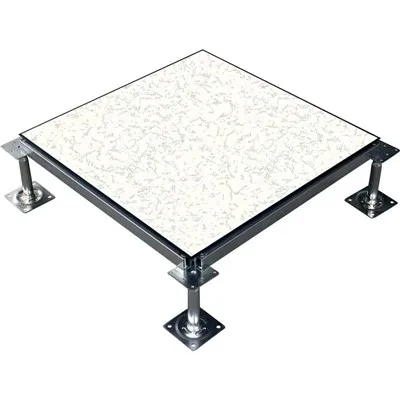
Raised floors solve a big part of that problem from the start. By elevating panels 6 to 24 inches above the subfloor, they create a sealed plenum space that’s completely isolated from the cold floor below. That means no more standing water pooling in floor cracks, no more moisture seeping into flooring materials and freezing, and no more condensation dripping on electrical wiring or palletized goods. But not all raised floor panels are built to handle that kind of cold. I’ve seen cheap, particleboard core panels warp so badly after three months in a -15°F space that pallet jack wheels got stuck between gaps. The good ones? They’re made for harsh industrial environments.
The panels that work for cold storage have two non-negotiable features: a steel or high-density composite core and a protective coating that doesn’t crack at sub-zero temperatures. For example, our most popular industrial panel uses a 14-gauge galvanized steel core that’s filled with a fire-resistant, closed-cell insulation material—think the same foam used in freezer walls—instead of porous particleboard. That core doesn’t absorb moisture, even if a spill happens, and it doesn’t contract or expand enough to create gaps when temperatures drop. The top coating is a heavy-duty epoxy that’s engineered to withstand -40°F temperatures; we tested it in our lab by cycling temperatures from 70°F to -20°F 500 times, and it didn’t chip, peel, or lose its grip when forklift tires rolled over it.
But here’s where the real value comes in, beyond just durability. Most cold storage facilities rely on a maze of wiring, piping, and HVAC lines that snake along the floor, tucked between pallets or run through unfinished ceiling cavities. That makes maintenance a logistical nightmare. If a refrigeration line leaks, you have to move an entire row of pallets, rip up a section of flooring, and call in multiple contractors to fix it. With a raised floor, all those utilities live in the plenum space underneath the panels. Access is as simple as lifting a 50-pound panel—something one worker can do in 10 seconds with a standard panel puller. That cuts maintenance time by 70% in our clients’ cases, per their own reports.
We installed a 1,200-square-foot raised floor system at Joe’s warehouse six months ago, and he texted me last week to say they haven’t had to pull a single panel for repairs yet. Before, they’d had three leaks in the utility lines that required 24 hours of downtime each to fix. Now, if something goes wrong, they can get in there in an hour. The plenum space also acts as a buffer for cold air distribution, too. Some cold storage operators use the space to pull cool air from the floor, reducing hot spots near pallet edges that can cause food spoilage. It’s not a replacement for your main refrigeration system, but it’s a low-cost upgrade that cuts down on uneven temperatures throughout the facility.
That said, it’s not all smooth sailing. There are two big pitfalls to avoid when using raised floors in cold storage, and I’ve seen too many operators fall for them. First, not accounting for panel load capacity. Forklifts don’t care how fancy your panel coating is; if the core can’t hold 8,000 pounds per square foot (the standard for industrial forklift traffic), the panels will bend, crack, or collapse. A lot of cheap raised floor panels are rated for 2,000 to 4,000 pounds per square foot—fine for a small office, but useless for a cold storage floor that’s moving full pallets of meat. We always recommend checking your maximum load first: if you’re using standard pallet jacks, 6,000 pounds per square foot works, but for reach trucks and double-deep racking, go for 8,000 pounds.
The second pitfall is sealing the plenum space wrong. If you leave gaps between panels or along the edges where the floor meets walls, cold air will seep into the plenum and cause condensation to form on the utility lines. We use a cold-resistant silicone sealant rated for -50°F that we apply along all panel seams and wall bases during installation. It’s an extra step that adds a day or two to the project, but it’s the difference between a system that works and one that develops mold or frost in the plenum within a year. We also recommend adding a small vapor barrier at the bottom of the plenum, between the subfloor and the first row of panels, to block any moisture that might seep up through cracks in the concrete.
Another common question I get: Do raised floors work with pallet racking? The short answer is yes, as long as you install the rack anchors correctly. You can’t just bolt the rack feet to the raised floor panels—they’re not designed to hold the 10,000 pounds of a full pallet rack. Instead, we use long, heavy-duty anchors that go through the panels and into the subfloor below. That distributes the rack weight across the concrete, not the panels, and it keeps the rack stable even when a forklift bumps into it in low light. We’ve worked with racking manufacturers to create custom plates that fit between panel seams, so the anchors don’t have to cut through panels, which keeps the seal intact.
Let’s talk numbers, because at the end of the day, cold storage operators care about costs. The upfront cost of a raised floor system is about 15-20% higher than a standard concrete floor, but the long-term savings add up fast. One of our clients in Chicago, a frozen food distributor with a 10,000-square-foot warehouse, told us they spent $12,000 a year on concrete floor repairs, patching cracks and fixing moisture damage. With the raised floor system we installed two years ago, they’ve spent less than $1,000 on maintenance—mostly for cleaning panels and replacing a handful that got damaged during forklift missteps. They also cut their utility bills by 8% because the plenum space helps circulate cold air more evenly, reducing the load on their refrigeration units. That’s a return on investment in less than two years.
It’s also worth noting that raised floors aren’t just for large, brand-new facilities. We’ve retrofitted systems in warehouses built in the 1980s that had failing concrete floors, and the process is less disruptive than you’d think. Instead of tearing out the entire old floor, we install support pedestals on top of the existing concrete, then lay the panels over them. The only prep work is grinding down any high spots in the concrete so the pedestals sit level, which takes about three days. That means no downtime for full facility teardowns, which is a huge win for cold storage operations that can’t afford to shut down for weeks at a time.
I want to be clear: Raised floors aren’t a one-size-fits-all solution. If you have a small walk-in freezer with only hand trucks, a $500 modular raised floor might be enough, no need for heavy industrial panels. But if you’re running a facility with full-size forklifts, moving pallets 18 hours a day, and dealing with constant maintenance headaches, it’s worth the investment. We recently did a test with a -18°F pharmaceutical cold storage space, where temperature consistency is a matter of regulatory compliance, not just cost. The operator reported that the raised floor cut hot spot occurrences by 90%, which helped them pass their FDA audit on the first try. That’s not just a convenience—it’s a make-or-break for their business.
So if you’re tired of patching concrete, waiting days for repairs, or dealing with condensation ruining wiring or inventory, it’s worth talking to a supplier who specializes in industrial raised floors. The key is to pick panels that are built for cold temperatures, with a heavy-duty core and coating, and to work with installers who understand the unique needs of cold storage facilities—load capacity, sealant, rack anchors, all of it. It’s not a magic fix, but it’s a solution that’s been tested in real cold rooms, with real operators, and it works.
Joe, the warehouse manager I met in that loading bay, texted me last month to send a photo of his team using a panel puller to fix a leaky valve under the floor. The caption said, “No more pallets moved. No more 24-hour downtime. This was the best upgrade we’ve done in 10 years.” If that’s the kind of change you’re looking for in your cold storage, don’t write off raised floors just because you’ve only seen them in data centers. They’re built to handle harsh conditions—you just have to pick the right ones. For more information on how our panels perform in cold storage environments, or to discuss a custom solution for your facility, feel free to get in touch.
Anti Static Raised Floor References
ASTM International. (2020). Standard Test Method for Low-Temperature Adhesion of Coatings. ASTM D4496-20.
Industrial Flooring Association. (2022). Cold Storage Floor Design and Maintenance Guidelines. IFA Technical Bulletin 17.
National Refrigeration Contractors Association. (2021). Utility Distribution in Cold Storage Facilities. NRCA Report 01-21.
Fineco Tech Co., Ltd.
As one of the most professional raised floor panels manufacturers and suppliers in China, we’re featured by quality products and good service. Welcome to wholesale customized raised floor panels made in China here from our factory. If you have any enquiry about cooperation, please feel free to email us.
Address: Wuyue Square, Wujin District, Changzhou, Jiangsu, China
E-mail: info@finecotech.com
WebSite: https://www.finecoglobal.com/
