If you’ve ever waited for a summer group ride only to watch half the fleet blow out on the way to the trailhead, or spent a frigid winter morning swapping frozen, flat inner tubes before your commute, you’ve probably wondered why temperature has such a weird, dramatic effect on something that feels so simple. As someone who’s been supplying bicycle inner tubes for nearly a decade, I’ve fielded hundreds of questions from riders about this exact phenomenon—from casual weekend warriors to pro mechanics who’ve spent years troubleshooting. Most people chalk it up to “rubber expanding and contracting,” but the reality is way more nuanced, and it directly impacts how we design, test, and recommend tubes for every kind of rider. Let’s break it down, plain and simple, no stuffy textbook jargon, just real-world data and lessons I’ve learned on the shop floor and in our warehouse. Bicycle Inner Tube
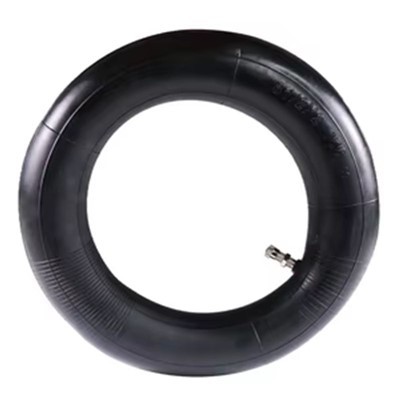
First, let’s start with the basics that every rider can see and feel: how temperature alters the air inside your tube, because that’s the main driver of most of the common issues you’ll run into. Bicycle inner tubes are, at their core, a flexible container holding compressed air, and air follows a really predictable scientific rule called Gay-Lussac’s Law. For anyone who slept through high school chemistry, that law says that if the volume of a gas (in this case, air inside your tube) stays the same, its pressure goes up or down in direct proportion to its absolute temperature. Absolute temperature means you don’t use Fahrenheit or Celsius, you use Kelvin—so 0 degrees Kelvin is the coldest possible temperature, where all molecular movement stops. Let’s put that in terms riders actually deal with: at 20 degrees Celsius (about 68 degrees Fahrenheit, a perfect spring evening), a tube inflated to 60 PSI will sit right around that number. Now, jump to a 38-degree Celsius (100-degree Fahrenheit) asphalt parking lot at noon: in just 20 minutes, that air inside the tube warms up by 18 degrees Celsius, and your pressure jumps by roughly 18 PSI, bringing it to almost 78 PSI. That’s a 30% increase in pressure in less than an hour, from something as simple as sitting in the sun.
For winter, it works the opposite way: drop that same tube down to -10 degrees Celsius (14 degrees Fahrenheit) for a pre-dawn commute, and that same 60 PSI will drop to around 50 PSI, almost a 17% decrease, just from the air cooling. But here’s where most riders and even some new suppliers miss the fine print: that’s only if the tube’s volume doesn’t change. But the tube itself—made of butyl rubber, which is the standard 95% of inner tubes use for its durability and low air permeability—also changes size with temperature. Butyl rubber is an elastomer, which means its molecules are long, flexible chains that move and stretch as temperature shifts. When it’s warm, those chains get more energetic, vibrate faster, and the material expands a tiny bit. When it’s cold, those chains slow down, stiffen, and the whole tube shrinks. That might sound trivial—we’re talking about a volume change of less than 2% over a typical 50-degree temperature range—but that small shrinkage in cold air amps up the pressure drop even more, because the available space for the air is smaller, so the pressure drops faster. For riders, that means a tube that feels properly inflated at room temperature will be way underinflated on a frosty morning, leading to pinch flats from hitting potholes, sluggish handling, or even rim damage if the tire bottoms out against the metal. On the flip side, that 2% expansion in warm heat means that if you inflate to the exact recommended pressure in a hot shop before a ride, you could be over your rated limit by 10-15 PSI by the time you hit 80-degree pavement, which increases the risk of a blowout from a sharp rock or a hard impact.
But wait—temperature doesn’t just alter air pressure and tube size. It actually changes the physical properties of the rubber itself, which is where I’ve seen the most preventable tube failures over the years. Most riders don’t realize that butyl rubber isn’t infinitely flexible. There’s a temperature range where it stays pliable, and if you go too far outside that, it turns brittle. For example, I once had a rider bring in a set of tubes after a mid-winter race, where 10 of the 24 tubes had split along the seam where the valve attaches. When I looked at the tubes, they were hard as plastic, not the soft, rubbery feel you expect from a new tube. That’s the glass transition temperature of butyl rubber: right around -40 degrees Celsius (-40 degrees Fahrenheit, for what it’s worth, that’s the same on both scales). Below that temperature, the rubber’s molecular chains stop moving entirely, so it becomes rigid, not elastic. So when you hit a pothole or a root on a cold ride, the tube doesn’t flex to absorb the impact—it’s like hitting a rigid pipe, so it splits under the sudden pressure spike. That’s a way bigger issue on fat bikes or mountain bikes, where tubes are under more stress from large tires and rough terrain, than on road bikes with narrow, high-pressure tires.
On the hot side, rubber doesn’t just get softer—it degrades faster. I’ve been testing tubes for our catalog for years, and we have a standard test where we expose new tubes to 60 degrees Celsius (140 degrees Fahrenheit) for 72 hours, then stretch and inspect them. Tubes that fail that test are usually the cheap, thin butyl varieties from overseas, and we’ve found that their tensile strength drops by 25-30% after that kind of heat exposure, compared to 5% for our premium thick butyl tubes. That’s because heat speeds up the oxidation of rubber molecules—sunlight, the heat from asphalt, even the friction between the tube and the tire casing when you ride fast all break down those long rubber chains. Over time, that leads to small cracks forming on the inside of the tube, often along the valve stem or the seams, which can cause slow leaks or sudden blowouts when you put them under pressure. I once had a tourist come into our shop after a week-long bike tour through Arizona in July, and he had three tubes blow out in one day. He’d inflated them to 60 PSI back home in Oregon, and the combination of 110-degree pavement, 80-mile days, and constant flexing from riding wore through the weakened rubber in just a week. That’s not a flaw in his riding—it’s a flaw in choosing a thin tube that wasn’t designed to handle that kind of temperature and stress.
Another common mistake I see riders make, especially when they’re switching between seasons, is how they adjust their tire pressure to account for temperature. The standard advice for road bikes is to adjust pressure by about 2 PSI for every 10-degree shift in temperature, but that’s a rough guideline, and it doesn’t account for tire volume or riding style. For mountain bikers, it’s even more important to think about both air pressure and rubber flexibility. When it’s cold, dropping tire pressure enough for traction can make the tube more vulnerable to impact, because the rubber is stiffer and the tire doesn’t absorb bumps as well. That’s why we started offering a “cold-weather reinforced tube” a few years ago—we use a slightly thicker butyl rubber that’s formulated to have a lower glass transition temperature, around -50 degrees Celsius, so it stays flexible down to way colder temps, along with a sturdier valve stem that won’t crack when it’s stiff. We worked with a group of fat bike guides in Alaska to test that prototype, and they reported zero tube failures over a winter where temps dropped to -35 degrees Fahrenheit, compared to a 12% failure rate with standard tubes. That kind of testing is why we don’t just source tubes from the cheapest supplier—we test every batch in a range of temperatures to make sure they perform as promised.
I also want to address a myth I hear all the time: that latex tubes are better than butyl for temperature changes. A lot of road riders swear by latex because it’s lighter and rolls faster, but latex has a way wider range of temperature sensitivity than butyl. Latex’s glass transition temperature is around -10 degrees Celsius, so below that, it’s brittle, and above 50 degrees Celsius, it softens so much that it loses its structural integrity, leading to more punctures. We used to carry latex tubes, but we stopped a few years ago after too many riders came back with blown latex tubes after summer rides, especially on long, steep climbs where the tubes flexed constantly and got hot. Butyl is still the best all-around choice for most riders, in my experience, because it holds air well and stays consistent across a wide temperature range, as long as you choose the right grade for your riding conditions.
So what does all this mean for you, as a rider, not just a supplier rambling about rubber and air pressure? First, don’t just inflate your tubes once and forget them—check your pressure before every ride, especially if you’re riding in extreme temps. If you’re heading out on a frosty morning, inflate your tubes to the recommended pressure at room temperature, then add a few PSI because they’ll drop when they get cold. If you’re riding on a hot summer afternoon, don’t inflate to the full recommended pressure inside a cool building—leave some room for that pressure to rise as the tube warms up, which will prevent blowouts. Second, if you ride in extreme conditions—winter fat biking, summer mountain biking, long-distance road tours—don’t skimp on tube quality. Cheap, thin tubes might save you a few dollars upfront, but they’ll fail more often, and you’ll end up stuck on the side of the road or replacing them more frequently. Third, store your tubes properly—don’t leave them in your garage in direct sunlight all summer, or in your car trunk where temps can swing wildly. I always advise riders to keep a spare tube in their pack at room temperature, not stuffed in a hot jacket pocket or a frozen frame bag, and to check the expiration date on their tubes—even unused, rubber breaks down over time, especially from heat and cold.
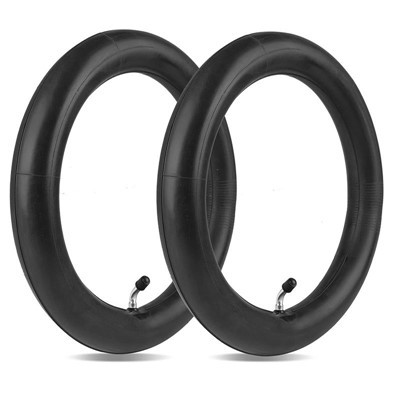
As someone who’s spent thousands of hours working with these little pieces of rubber, I can tell you that temperature isn’t just a minor detail when it comes to inner tubes—it’s the biggest factor in how they perform, how long they last, and whether you get to finish your ride or end up changing a flat at the worst possible time. We’ve built our business around making tubes that hold up in real-world conditions, not just lab tests, and we’ve refined our formulations over the years based on feedback from riders all over the world, from tropical Hawaii to frozen Canada. If you’re a rider looking for inner tubes that are tested to handle the temperatures you ride in, or if you’re a shop owner or fleet manager looking for a reliable supplier, feel free to reach out to discuss your specific needs. We’d be happy to send you test samples, answer your questions, or work with you to find the right tubes for your riding style and conditions.
Motorcycle Tube References
- Mark, J. E., Erman, B., & Roland, C. M. (2005). The Science and Technology of Rubber. Academic Press.
- ASTM International. (2020). Standard Test Method for Tensile Properties of Rubber. ASTM D412-20ae1.
- Gay-Lussac, J. L. (1802). Recherches sur la dilatation des gaz et des vapeurs. Mémoires de la Société d’Arcueil.
- Nicksic, S. W., & Porter, R. S. (1971). Glass transition temperatures of elastomers. Rubber Chemistry and Technology, 44(2), 342-356.
Jiangxi Vimia Tyre Co., Ltd.
We’re well-known as one of the leading bicycle inner tube manufacturers and suppliers in China. We warmly welcome you to wholesale bulk high quality bicycle inner tube in stock here from our factory. If you have any enquiry about quotation, please feel free to email us.
Address: Zone C, Industrial Park, Jinxi County, Fuzhou City, Jiangxi Province
E-mail: 17779452635@139.com
WebSite: https://www.cnvimia.com/
