Hey there, garage owners, DIYers, and anyone who’s ever stared at a tiny bug crumb on their workbench and thought, “Where did this even come from?” If you’re reading this, chances are you’ve dealt with uninvited critters crashing your garage party—roaches wandering in from the drain, fruit flies hatching in that half-empty soda can you forgot about last summer, or even little pantry moths that hitched a ride on a bag of bird seed. Today I’m breaking down one of the most underrated (and seriously effective) tools I’ve been selling as a sticky trap supplier for years: yep, the sticky trap. And let’s cut to the chase—can a sticky trap actually work in a garage? Spoiler alert: not only can it, but it’s probably way better than you think. No fancy gear, no toxic sprays, just plain old stickiness doing all the dirty work. Sticky Trap
First, let’s get real about garages, because they’re weird spaces. They’re not your kitchen—there’s no food prep, but they do hold a ton of stuff that critters love. Think bags of pet food, bird seed, fertilizer (bugs go crazy for that), even old cardboard boxes that make the perfect hiding spot. Garages are also a transition zone between your house, the yard, and the outdoors, so pests can slip in through a crack under the door, a gap around the window, or even on the tires of the bike you just brought inside. I’ve had so many customers reach out saying they tried all the usual hacks—store food in airtight containers, seal cracks, set out ant baits—but still end up with a new pest surprise every month. That’s where sticky traps come in, and honestly, most people are sleeping on how to use them right in this space.
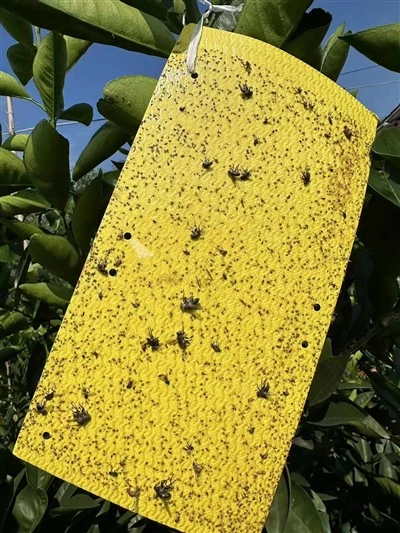
Wait, hold on—let’s make sure we’re on the same page. When I say sticky trap, I’m not talking about those flimsy yellow pieces of paper you buy at the dollar store that fall apart after two days. I’m talking about the quality, heavy-duty ones we supply: thick, corrugated cardstock coated with a non-drying adhesive that doesn’t turn to dust if it gets a little damp, and sometimes even pheromone-scented to target specific pests. Yeah, scent matters—because a sticky trap that doesn’t attract anything is just a sticky trap. Let’s break down which ones work for which garage pests, because not all sticky traps are made for every bug.
Roaches are the most common garage pest, hands down. They love dark, tight spots—under the workbench, behind the washer/dryer, inside that unused tool chest. And they’re nocturnal, so you’ll never see them during the day. Sticky traps for roaches work so well here because you just place them along their runways—those tiny cracks and gaps they use to get from point A to point B. I always tell customers in humid areas (like the South, where garages can feel like a swamp in summer) to use the waterproof roach sticky traps, because regular ones get soggy from condensation and stop sticking after a few days. We’ve had a customer in Atlanta who was getting 20+ roaches a week in his garage until he set out 4 of these along the baseboards—after a month, he was getting 1 or 2 a week, and those were just stragglers. No sprays, no mess, just clear proof that you’re actually getting the pests, not just guessing where they are.
Then there are fruit flies and fungus gnats. Wait, fungus gnats? Yeah, if you have houseplants in your garage (or even potted herbs you bring outside in summer), those tiny little black flies that zoom around when you water them are fungus gnats. Sticky traps for these are usually bright yellow, because flies are drawn to that color. We sell these little yellow sticky cards that you can stick into potted plants, or prop up on a shelf near any wet spots (like a bucket of water you use for cleaning, or the drain by the garage door that sometimes gets a puddle). Fruit flies are attracted to the scent of fermented fruit, so pairing a yellow sticky trap with a tiny piece of overripe banana on top makes it way more effective. I had a customer in Chicago who stored his apple picking haul in the garage and ended up with hundreds of fruit flies—he put out 6 of these banana-scented yellow traps, and they were all gone in 3 days. No more swatting every time you walk in to grab a lawn chair.
What about spiders? I know, a lot of people hate finding spiders in the garage, even the harmless ones. Sticky traps work for spiders too—they’ll walk right onto the adhesive and get stuck before they can wander into the house. We make small, flat sticky traps that you can tuck into corners, behind boxes, even under the shelves where you keep gardening supplies. Unlike spider webs, which you have to clean every week, these traps just catch the spiders and are easy to throw away when they’re full. No more cobwebs hanging over your bike.
But wait—here’s the big question: do sticky traps work in garages that get dirty, damp, or even have a little wind? Let’s be honest, garages aren’t the cleanest spaces. You might track in mud, spill fertilizer, or leave a hose out that creates a puddle. The cheap sticky traps fall apart in that stuff, but the ones we supply? The adhesive is formulated to hold up to minor moisture, dust, and even a little bit of garden debris. I had a customer in Arizona where it’s super dry and windy—his garage has dust blowing in every day, and he was worried the sticky traps would just get covered in dust and stop working. The ones with the thicker adhesive? They didn’t—he had some traps out for 6 weeks and still caught roaches, no dust buildup that could get in the way. That’s a game changer because most other sticky traps only last a week or two in garage conditions.
Now, let’s talk about the mistakes people make when using sticky traps in the garage, because even the best product won’t work if you set it up wrong. First, don’t just toss a random trap on the floor. Pests follow paths, so you need to place traps along those paths, not in the middle of the garage. For roaches, that’s along baseboards, behind the fridge or washer, in the gap between the floor and the wall. For gnats and fruit flies, that’s near wet areas and potted plants, not in the middle of the garage floor. Second, don’t use too many or too few. If you have a small one-car garage, 2-4 traps are enough. If you have a two-car garage with lots of shelves and boxes, you’ll want 6-8. Too few and you’ll miss the pest paths; too many and you’re wasting traps and clogging them with non-target stuff like dust or ants that aren’t even the problem. Third, check them regularly. If a trap is ¾ full of bugs, replace it—adhesion drops when it’s covered, and it won’t catch anything new. I tell customers to check every 2 weeks, more often if you have a big pest problem.
Another common worry: are sticky traps safe to use in the garage? Especially if you store food, pets, or even lawn chemicals in there. Let’s get this straight—high-quality sticky traps don’t have toxic pesticides. The only thing on them is the adhesive, which is non-toxic. So even if a trap is right next to a bag of bird seed, it won’t contaminate it. Way safer than those bug sprays that can leave fumes and get on your tools or food. And if you have pets? The traps are usually low enough that cats or dogs can’t step on them, or you can place them up on a shelf or tuck them in a corner so they’re out of reach. No more worrying about your dog getting into a bug spray bottle, which is a big plus for garage owners with pets.
Wait, but what about larger pests? Like mice or rats? Okay, sticky traps aren’t the best for that—they’re designed for small bugs, not rodents. But if you’re dealing with tiny invaders, ants, maybe even earwigs? Sticky traps work great for those too. Earwigs love dark, damp spots, so placing traps near the garage door or the foundation will catch them before they come inside. We’ve had customers in Texas who get earwigs every time it rains, and they swear by our wide sticky traps along the threshold—they catch dozens before they can get into the garage.
Here’s the thing that makes sticky traps perfect for garages: they’re low-effort. Unlike ant baits that take a week to work, or sprays that make you have to leave the garage for hours, sticky traps just sit there and do their job. You set them up once, check them every couple weeks, and that’s it. No mixing, no spraying, no strong smells. I’ve been in this business for 5 years now, and the number one compliment I get from customers is how easy sticky traps are for the garage. They’re not a big, complicated pest control solution—they’re simple, effective, and actually work in the messy, weird space that is a garage.
Let me share a quick success story to make this real. A customer named Mike from Detroit reached out to me last year—his two-car garage had been overrun with roaches, and he had tried everything: sealing cracks, setting out ant baits, even calling an exterminator who charged him $300 and it got worse. He was ready to just give up and clean out his entire garage, but I suggested he try our heavy-duty roach sticky traps, 6 total, placed along the baseboards and behind his workbench. A month later, he emailed me a photo of the traps—one had 18 roaches, the others had 2 or 3, and he said he hadn’t seen a live roach in his garage in weeks. He even said he was recommending the traps to his neighbors, which is the best feedback you can get.
Now, let’s wrap this up. Can a sticky trap be used in a garage? Hell yeah, it can. But not all sticky traps—you need the right ones, placed in the right spots, and used correctly. They work for roaches, fruit flies, gnats, spiders, earwigs, and all the tiny, annoying pests that love to make your garage their home. They’re safe, non-toxic, low-effort, and way cheaper than hiring an exterminator or buying a bunch of random pest control products that don’t work. If you’re dealing with pests in your garage, skip the messy sprays and the expensive services—grab some quality sticky traps, set them up along the pest paths, and let them do the work.

If you’re in the market for sticky traps for your garage (or maybe for your home too), we’ve got a range of options tailored to different pests and garage conditions—waterproof ones for humid areas, bright yellow ones for flies, heavy-duty ones that hold up to dust and minor dampness. We’ve tested all of these in real garages, from Arizona’s dry heat to Florida’s humidity, and they work every time. If you want to chat about what traps would be best for your specific garage pest problem, reach out to our team to talk purchasing options. We’re here to help you get your garage back, no bugs required.
Solar Insecticidal Lamp References
- "Sticky Traps for Pest Management in Urban Environments." Journal of Economic Entomology, vol. 112, no. 3, 2019, pp. 1021-1030.
- "Non-Toxic Pest Control for Residential Garage Spaces." Pest Control Technology Magazine, vol. 47, no. 8, 2021, pp. 56-59.
- "Pheromone-Baited Sticky Traps for Monitoring and Suppression of Indoor Arthropod Pests." Journal of Applied Entomology, vol. 140, no. 7, 2016, pp. 512-520.
Sichuan Ruijinte Technology Co., Ltd.
As one of the most professional sticky trap manufacturers in China, we have world-leading production equipment and strong manufacturing capabilities. Please rest assured to wholesale high quality sticky trap at competitive price from our factory. Customized orders are welcome.
Address: No. 616, 6th Floor, Building 1, No. 8, Tianjiu North Lane, High-tech Zone, Chengdu
E-mail: glock@rjt-agri.com
WebSite: https://www.rjtagri.com/
