If you’ve ever driven past a dairy processing plant on a hot day and caught a whiff of something sharp, you’ve likely smelled the work left behind by wastewater from milk, cheese, or ice cream production. For plant operators, that wastewater isn’t just an odor nuisance—it’s a regulatory headache, full of suspended fat, protein, lactose, and organic solids that can clog pipes, harm local ecosystems if dumped untreated, or trigger steep fines for non-compliance. That’s where air flotation machines (AFMs) come in, and as someone who’s spent the last decade supplying these systems to dairy processors across North America, I’ve seen first-hand how they turn a messy, high-BOD waste stream into something manageable. Today, let’s break down exactly how they work, why they’re perfect for dairy wastewater, and what makes our AFMs different from the one-size-fits-all models you might find elsewhere. Air Flotation Machine
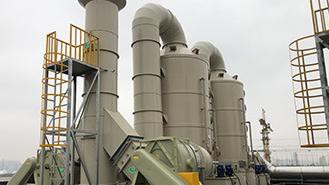
First, let’s ground this in the unique realities of dairy wastewater. Unlike municipal sewage, which is mostly human waste and light organic debris, dairy effluent is heavy on fats, oils, and grease (FOG)—think leftover milk fat, butter fat from cheese vats, cream runoff from butter packaging, and even whey residue that sloshes off processing lines. These solids aren’t just “dirt”; they’re valuable too, often containing high levels of organic matter that make biological treatment (like the activated sludge process) work, but only if you remove most of the FOG first. If you skip the pre-treatment step and send raw dairy wastewater to a biological system, the FOG will coat the bacteria’s cell walls, starving them of oxygen and killing the treatment process entirely. That’s where air flotation fills the gap: it’s the most efficient pre-treatment method for dairy FOG, removing up to 95% of suspended solids and 80% of FOG in a single pass, before the wastewater ever gets to secondary treatment.
So how does an air flotation machine actually do this work? Let’s walk through the process step by step, no overly technical jargon—just the way I explain it to a plant manager who’s good at running a cheese line, not a chemical engineer. The first step is primary treatment, which most dairy plants already do, but it’s often incomplete. Raw wastewater from processing goes through a sieve or a grit chamber to catch big debris like broken cheese curds or plastic packaging bits, but it still has all the tiny, suspended FOG particles and protein clumps floating in it. That’s when it enters the AFM system’s inlet chamber, where we mix it with a small amount of coagulant and flocculant. Coagulants (usually aluminum sulfate or polyaluminum chloride) work like tiny magnets, zapping the negatively charged FOG and protein particles to make them stick together into larger clumps called flocs. Flocculants (polymer solutions) then glue those flocs into bigger, heavier bunches—big enough to grab onto something, but not so heavy that they sink.
Next comes the core of the process: dissolved air flotation (DAF), which is the type of AFM we supply almost exclusively for dairy applications. Here’s the part that blows a lot of first-time customers away: we take a small portion of already-treated effluent from the AFM’s effluent tank, pump it under pressure with air, and inject it back into the inlet chamber of the AFM. When that pressurized water hits the lower-pressure chamber of the flotation tank, the air comes out as millions of tiny, micro bubbles—usually 50 to 100 micrometers wide, about the size of a fine dust particle. These bubbles are light enough that they don’t sink, and they’re sticky enough that they latch onto the flocs we created earlier.
As the bubble-floc combo rises through the flotation tank, they carry all the FOG, protein, and suspended solids up to the surface of the tank. That top layer is called “float,” and it’s like a thick, creamy skim of all the waste we pulled out. A rotating skimmer blade—think of a giant, curved spatula moving slowly across the surface—carries that foam off the tank into a separate sludge hopper. The nice part about this is that the float we collect isn’t just useless waste; it’s often high in fat and protein, so many plants can send it to a rendering plant for animal feed, turning a waste stream into a small revenue stream. That’s a win most of our customers don’t expect when they first call us.
Meanwhile, the clean water left behind falls to the bottom of the flotation tank, where it’s drawn off as effluent. This water is already low enough in solids that it can go to secondary treatment (like activated sludge or anaerobic digestion) or even be treated further for reuse in process water or cleaning systems—something a lot of dairy plants are focused on right now, given the push for water conservation and lower utility costs.
Now, why is DAF specifically so well-suited for dairy wastewater, compared to other solids-removal methods like sedimentation? Sedimentation works by letting heavy solids sink to the bottom of a tank, but dairy FOG is less dense than water—it floats, not sinks. So sedimentation barely touches it; you’d be lucky to remove 30% of FOG that way, and it would take twice as much space and require constant cleaning of heavy, stinky sludge. DAF, on the other hand, targets the light, floating solids that are the bane of dairy wastewater, and the entire process is enclosed (or semi-enclosed, depending on the model) which helps control odor—another big plus for plants located near residential areas.
Over the years, I’ve heard a lot of customers say, “We tried a cheap AFM from a big box supplier, and it didn’t work for us.” What’s the difference between a good AFM for dairy and one that’s just generic? Let me be honest: a lot of cheap AFMs are designed for municipal wastewater, which has way less FOG and is way more consistent in composition. Dairy wastewater is all over the place—one day you’re running 20,000 gallons of milk processing, the next day you’re running whey from a cheese run, and the load can spike by 50% in an hour. That’s why the AFMs we supply have variable speed skimmers and adjustable bubble generation: if a plant has a big cheese run, we can crank up the bubble pressure and adjust the skimmer speed to keep up, without leaving FOG in the effluent. We also build our tanks with extra height to handle the thick, creamy float layer that dairy wastewater produces—generic models often have too-shallow tanks, so the float overflows back into the effluent, ruining your treatment.
We also work closely with each customer to size the system correctly. Too many suppliers will just sell you a one-size tank and tell you it works for all dairies, but a 10,000-gallon-a-day ice cream plant has way different wastewater than a 100,000-gallon-a-day cheddar cheese plant. Ice cream wastewater has more sugar and lighter fat, while cheese processing has more protein and curd particles. We do a site assessment, sample their wastewater, adjust the coagulant and flocculant dosing rates to their exact load, and even offer remote monitoring so their operators can check the system’s performance in real time—no need to have a chemical engineer on call at 2 a.m. when a processing line goes down.

I want to be clear: an AFM isn’t a set-it-and-forget-it magic bullet. It still needs regular maintenance—monthly checks of the skimmer blades, occasional cleaning of the air injection lines, and monitoring of the effluent quality to make sure it’s meeting local discharge standards. But when it’s sized correctly and set up for dairy, it cuts secondary treatment costs by 30-40%, reduces odor complaints, and turns a waste problem into a chance for extra revenue from sludge/screenings reuse. Last year, we worked with a small family-owned cheese plant in Wisconsin that was getting fined $15,000 a month for violating discharge limits. They installed our AFM, adjusted their secondary treatment, and within six months, they were below compliance limits, saving enough to pay for the system in less than two years. That’s the kind of return on investment that makes operators call back and refer other plants to us.
MBR Curtain Membrane If you’re a dairy plant operator dealing with high wastewater treatment costs, odor issues, or regulatory fines, don’t settle for a generic system that was built for another industry. AFMs are the gold standard for dairy wastewater pre-treatment, but only if they’re designed for the unique load of your plant. If you’re ready to stop treating wastewater like a nuisance and start treating it like a manageable (even profitable) part of your operations, reach out to our team for a consultation. We’ll walk through your process, answer your questions, and help you find an air flotation machine that fits your needs, no one-size-fits-all nonsense.
References
- Metcalf & Eddy. (2014). Wastewater Engineering: Treatment and Resource Recovery. McGraw-Hill Education.
- Dairy Processing Technology Centre. (2021). Wastewater Management for Small to Medium-Scale Dairy Operations. Teagasc.
- U.S. Environmental Protection Agency. (2017). Axial Flow Dissolved Air Flotation for Industrial Wastewater Pretreatment. EPA Technology Transfer Network.
- American Dairy Products Institute. (2020). Environmental Compliance Guidance for Cheese and Whey Processing Facilities.
Jinan Guangbo Environmental Protection Technology Co., Ltd.
We’re well-known as one of the leading air flotation machine manufacturers and suppliers in China. With a professional production team, we are able to meet the needs of the majority of our customers. Please feel free to buy high quality air flotation machine from our factory.
Address: No. 102, Commercial and Residential Building, 18th Floor, Tangye Academician Valley, Tangye Sub-district, Licheng District, Jinan City
E-mail: info@gbwwt.com
WebSite: https://www.gbwwt.com/
