In the dynamic landscape of industrial automation and robotics, servo – control systems play a pivotal role in achieving high – precision motion control. The choice of a motor for a servo – control system is a decision that can significantly impact the performance, efficiency, and overall success of the application. As a 5315 Motor supplier, I’ve been frequently asked whether the 5315 Motor can be used in a servo – control system. In this blog, I’ll delve into the technical aspects, advantages, challenges, and use – cases related to using the 5315 Motor in such systems. 5315 Motor

Understanding Servo – Control Systems
Servo – control systems are designed to precisely control angular or linear position, velocity, and acceleration. They typically consist of a servo motor, a servo drive, and a feedback device such as an encoder or a resolver. The servo drive receives a control signal from a controller (e.g., a PLC or a motion controller), amplifies it, and sends the appropriate electrical power to the servo motor. The feedback device continuously monitors the motor’s position or speed and sends this information back to the drive, allowing the drive to make real – time adjustments to ensure the motor moves as commanded.
The key requirements for a motor in a servo – control system include high torque density, fast response, accurate positioning, and smooth operation. The motor should be able to quickly accelerate and decelerate, maintain a constant speed under varying loads, and stop precisely at the desired position.
The 5315 Motor: An Overview
The 5315 Motor is a well – known product in the motor market. It is characterized by its compact design, relatively high power – to – size ratio, and reliable performance. The motor has a certain torque – speed characteristic curve that is determined by its internal electrical and mechanical design.
In terms of electrical characteristics, the 5315 Motor operates within a specific voltage and current range. It has a rated power, rated torque, and rated speed that are important parameters to consider when evaluating its suitability for a servo – control system. For example, its rated power may be sufficient for medium – sized applications that require a certain level of mechanical work to be done.
Technical Feasibility of Using the 5315 Motor in a Servo – Control System
Torque and Power Requirements
One of the primary considerations is whether the 5315 Motor can provide the necessary torque and power for the servo – control application. In many servo – control scenarios, especially those involving high – precision and high – speed movements, the motor needs to have a good torque reserve. The 5315 Motor’s torque – speed curve can be analyzed to determine if it can meet the peak torque requirements during acceleration and deceleration phases, as well as the continuous torque requirements during steady – state operation.
If the application only requires moderate power and torque, the 5315 Motor may prove to be a suitable choice. For instance, in some light – duty robotic arms or small – scale conveyor systems where the load is not extremely heavy, the motor’s power output can be sufficient to drive the mechanism and maintain the required speed and position accuracy.
Response Time
The response time of a motor is crucial in servo – control systems. A fast – responding motor can quickly adjust its speed and position in response to control signals, which is essential for achieving high – precision motion. The 5315 Motor’s electrical and mechanical inertia affects its response time. A lower inertia motor generally has a faster response.
The 5315 Motor’s internal design and construction can influence its inertia. If the motor has a relatively low inertia, it is more likely to have a short response time, making it suitable for applications that demand rapid changes in speed or position. However, in some cases where high – speed and precise micro – adjustments are required, the motor’s response time may need to be optimized further, perhaps through the use of advanced servo drives with high – gain control algorithms.
Precision and Accuracy
Servo – control systems require motors to offer high levels of precision and accuracy in positioning and speed control. The 5315 Motor can be used in conjunction with appropriate feedback devices to achieve this. For example, when paired with a high – resolution encoder, the motor’s position can be accurately monitored and controlled.
However, the inherent characteristics of the motor, such as its cogging torque (the torque variation caused by the interaction between the stator and the rotor magnetic fields), can affect the smoothness of operation and, consequently, the accuracy of positioning. If the cogging torque of the 5315 Motor is relatively low, it will contribute to a smoother motion, which is beneficial for high – precision applications.
Advantages of Using the 5315 Motor in a Servo – Control System
Cost – Effectiveness
One of the significant advantages of the 5315 Motor is its cost – effectiveness. Compared to some high – end servo motors specifically designed for servo – control systems, the 5315 Motor can offer a more budget – friendly option without sacrificing too much in terms of performance for certain applications. This makes it an attractive choice for small and medium – sized enterprises or projects with limited budgets.
Availability and Compatibility
As a well – established product in the market, the 5315 Motor is widely available. This means that replacement parts are easier to source, and the motor can be quickly integrated into existing systems. Additionally, it can be made compatible with a variety of servo drives through proper electrical and mechanical adaptations, providing more flexibility in system design.
Challenges and Limitations
Limited High – Performance Capabilities
While the 5315 Motor can meet the requirements of many applications, it may not be suitable for extremely high – performance servo – control scenarios. For example, in applications that demand ultra – high speeds, extremely high torque at very low speeds, or sub – micron level positioning accuracy, the motor’s performance may fall short.
Higher Maintenance Requirements
In some cases, the 5315 Motor may have relatively higher maintenance requirements compared to dedicated servo motors. This could be due to its design and construction, which may result in more wear and tear over time, especially in high – duty – cycle applications. Regular maintenance such as bearing lubrication and winding inspection may be necessary to ensure reliable operation.
Use – Cases
Small – Scale Automation Equipment
In small – scale automation equipment, such as pick – and – place machines for electronics manufacturing, the 5315 Motor can be used effectively in servo – control systems. These machines typically require moderate torque and speed, as well as a certain level of positioning accuracy. The cost – effectiveness and availability of the 5315 Motor make it a viable option for such applications.
Educational Robotics
Educational robotics projects often have budget constraints and do not require the highest – level of performance. The 5315 Motor can be used in servo – control systems for educational robots, allowing students to learn about motion control principles without incurring excessive costs.
Conclusion
So, can the 5315 Motor be used in a servo – control system? The answer is yes, but with certain considerations. For applications that have moderate performance requirements, cost – sensitivity, and a need for quick availability and integration, the 5315 Motor can be a suitable choice. However, for high – end, high – performance applications, other dedicated servo motors may be more appropriate.
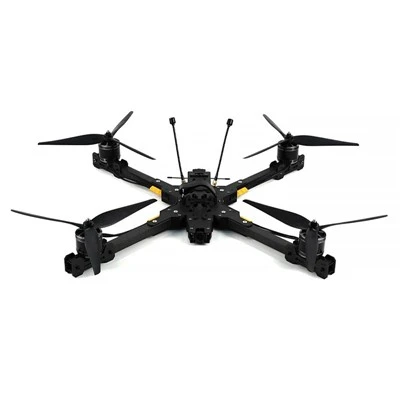
7 Inch FPV Drone As a 5315 Motor supplier, I am well – aware of the motor’s capabilities and limitations. If you are considering using the 5315 Motor in your servo – control system, I encourage you to reach out. We can discuss your specific requirements in detail and help you determine if the 5315 Motor is the right fit for your project. Whether you need advice on motor selection, technical support for system integration, or are interested in purchasing our 5315 Motors, please get in touch and start a procurement discussion with us.
References
- "Motion Control Handbook" by David A. Hindes
- "Servo Motors and Industrial Control Theory" by William Bolton
- Technical documentation of the 5315 Motor series
Xpert Intelligent Equipment Co., Ltd.
Address: Building 3, No. 65 Longhu Road, Longdong Community, Baolong Street, Longgang District, Shenzhen
E-mail: winnie@xpfpv.com
WebSite: https://www.xpfpv.com/
